WHAT I LEARNED FROM READING: ONE PUNCH MAN
By Eskido Kiazen
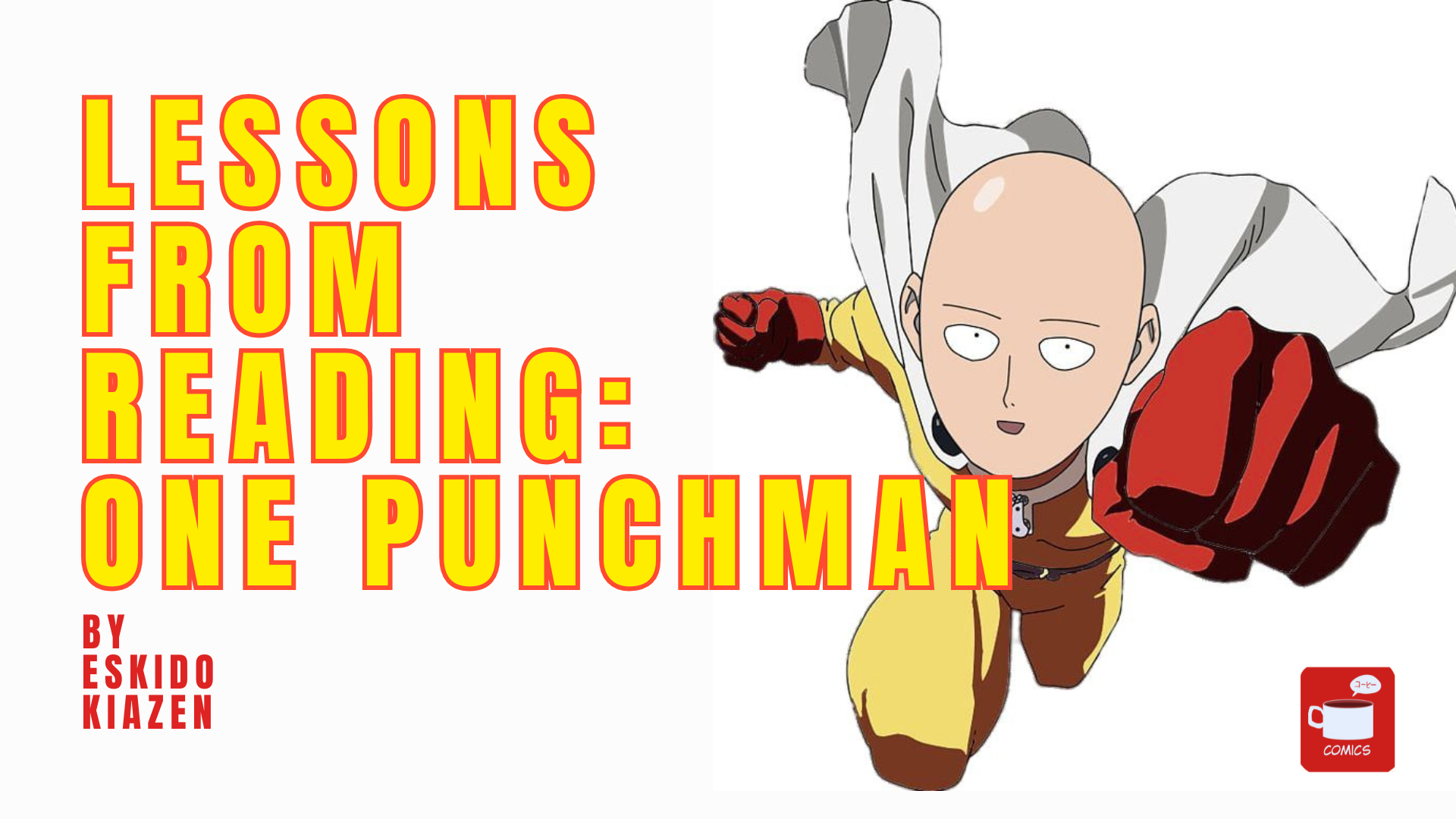
One Punch Man is an acclaimed manga and anime by ONE, blah, blah, blah. Everyone here knows all about One Punch Man by now. So, let’s just jump into the meat of this blog, what I’ve learned from reading and watching OPM.
Strength As a Theme
First, let me say there are many things we can learn from analyzing OPM, however I will be sharing my biggest takeaways from actively following the series. As a writer myself, I like to study what works, analyze it, and form an opinion on how it can help me in my works. Now, with no further ado, let’s dive into a few of my findings of OPM’s use of STRENGTH as a THEME.
Strength Personified
OPM in my honest opinion, uses its themes in a rather obvious way, and that’s by using personification. This means the author gave human traits to non-human things (themes); some may call these ideals. However, OPM’s characters go far beyond just holding onto ideals.
For instance, Saitama’s theme explores what happens once a protagonist reaches his goal. This is not his ideal; in fact, his ideal was that he needed to get stronger to become useful, which he did. His story now plays out the theme of what happens after you’ve reached your goal, and if you’re the strongest, what’s left?
What it Means to Be the Strongest
So, let’s talk about Saitama as” The Unfulfilled Achiever” and the emptiness of absolute power.
There are countless real-life examples of people who achieved their goals and are yet unfulfilled. Even worse, they become aimless wonders. High achievers often need the feeling of striving for higher heights to self-regulate. But what happens once you’ve climbed the tallest mountain?
Consider the astronauts who finally got to space or walked on the moon. There are several autobiographies and interviews in which they say, now that they have accomplished their lifelong goals, they now suffer from depression due to a lack of a current goal. I mean, all their lives they dreamed of that day, and they did it. They made it happen, but after all the celebrations, interviews, awards, celebrity and fame they are left wondering… what now?
This is exactly where we meet Saitama, the “Hero as a Hobbyist”. Bored to death, he wanders aimlessly around City Z, looking for cheap meals and deals from his local convenience store. And the series explores the pain of this theme.
Jim Carey once said that he wishes everyone could accomplish their wildest dreams. So that they would find out, it was all meaningless. To that affect we watch Saitama’s frustration after he punches a giant in the face and his disappointment of not having a back-and-forth battle after easily obliterating it, says it all.
The Will to Win
Now my favorite example of OMP’s personification of the theme of strength has to be, Class C Hero: Mumen Rider. Mumen Rider is “Strength of Spirit,” the unwavering will to win incarnate. Now there are many anime characters who have this attribute. In fact, it may be an unwritten rule that all protags must be embedded with it in their DNA. Goku, Deku, Naruto, Rock Lee and the list goes on and on. I mean, many characters push past their limitations in order to become victorious.
However, Mumen Rider is a bicyclist in a normal helmet and pads, and he ends up facing off against the big bad boss all alone. Outclassed to say the least, we see a realistic view of this unwavering will to win, and it FAILS… After standing up repeatedly from thrashings and even after the crowds believed that maybe he could actually win somehow. He was pulverized and put down yet again. I guess we all can’t become whatever we wanted to be after all, Mom. The strength of spirit versus body was on full display, leaving us wondering; what does it truly mean to be strong when you are weak?
The Lost Humanity of Genos
Lastly, let’s look at Genos, “The Man Who Lost his Humanity,” to become stronger, strength as redemption. Again, there are many forms of media that have characters who end up losing their humanity to seek revenge or defeat their enemies. Sasuke, Majin Vegeta, or Erin Yeager, in anime and manga alone, to name a few.
However, Genos literally has no human aspects left. Maybe his brain (if that) is all that remains, but no other vitals, none. They have all been replaced by cybernetics. A price he was willing to pay to seek revenge on the robot that destroyed his hometown (or something like that). Erin (Attack on Titan) also became like the monsters he hated, both physically and metaphorically, and Genos is a character cut from that same self-mutilating cloth. Genos is obsessed with becoming stronger to avenge his family and prove his worth, and we watch what that looks like through every page and interaction he faces.
Honorable Mentions
Garo embraces the monster within for strength. King is when others think you’re stronger than you truly are, like how children see their dads. Child Emperor has intelligence as his strength. Hellish Blizzard is strength in numbers. Tanktop Master is the strength in a belief outside of yourself, regardless of how foolish it is. And Suiryu is the belief that the strong live easier and better lives.
Now, What Can We as Writers Learn from This?
Well… firstly, abstract themes work best when embodied by characters. So instead of using a whole lot of Talk-No-Jutsu to hint at a theme, have the characters live and breathe it out on the page. Let the readers gather the meaning from the subtext.
Second, pick one theme and have every character already dealing with the consequences of the beliefs they hold regarding that theme. Don’t be afraid of offending people whose views you disagree with, because just like you may have not realized Mumen Rider’s “will power alone” attitude was shown to be not enough; others may not pick up that you are picking out faults in their worldviews.
Third, give your characters physical metaphoric attributes that hint at their beliefs regarding the theme they represent. Think of ways to hint to the reader that they are who you say they are, thematically.
Finally, Let’s Give This a Try!
Let’s say I were to be writing using the theme of LOVE as a lens. I could have one character embody “love is sacrifice,” let’s call him Kerry, and another character embodies “love is Possessive” let’s call her Marry. Kerry can have guardian vibes. Maybe he’s a knight who’s missing an arm and a leg and they’re replaced by gold prosthetics. Now, Marry can be a lone wolf, so I’ll give her Fox ears and tail, no friends and she’s an anti-establishment type of gal, a rebel. Then I could have them both play out an action comedy retelling of Romeo and Juliet. Done. Easy, right?
Now it’s your turn, go on and give it a try for yourselves.
MANGAWD!

Monthly Gag: The New Recruit
Monthly Gag #7: The Action Figure